

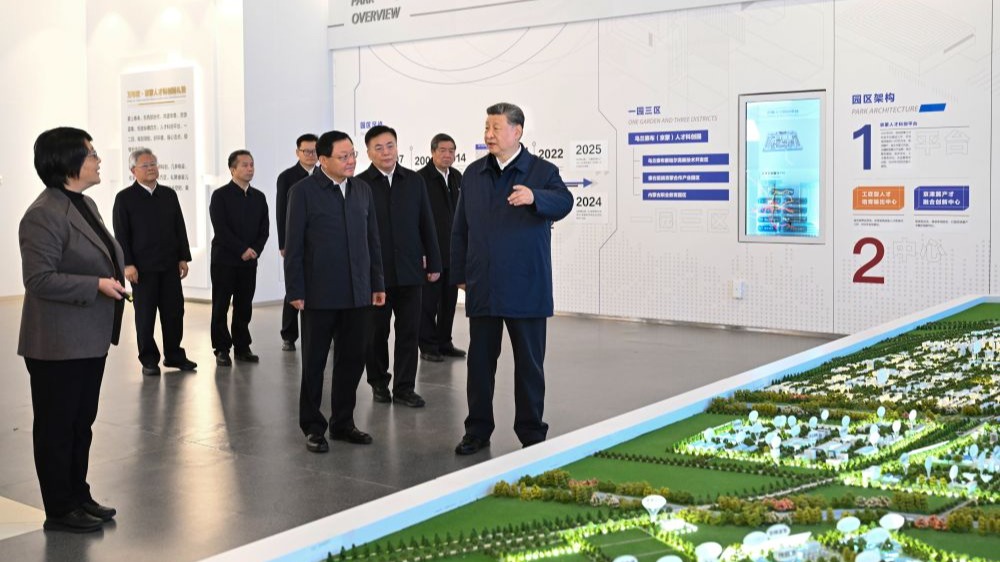
Ulanqab, an Inner Mongolian city traditionally known as China’s potato capital, is rapidly expanding its renewable-powered data infrastructure after generating 5.68 billion yuan in computing revenue this year. The regional transformation highlights how local wind and solar energy supplies are reshaping daily economic life alongside major national data development programs.
Official records show the municipality secured contracts for 109 computing center projects by August 2026, achieving a 40.3 percent year-on-year revenue increase to approximately 849 million dollars. During an inspection tour of the Chahar High-Tech Development Zone on Friday, Chinese President Xi Jinping reviewed progress on facilities built under the national “East Data, West Computing” program introduced in 2022. President Xi stressed the importance of operating completed facilities efficiently and completing upcoming stages on schedule.
Efforts must be made to rigorously implement the requirements of efficient, green, and safe development, and actively promote the growth of the green computing power industry.
Benefiting from an annual average temperature of 4.3 degrees Celsius, Ulanqab utilizes free natural cooling for nearly 10 months each year, reducing operating costs for data operators. John Gong, an economics professor at the University of International Business and Economics, spoke to CGTN regarding the region’s technological turn.
Ulanqab has effectively utilized its rich local renewable energy resources to support China’s artificial intelligence development, and this visit highlights President Xi’s endorsement of the Ulanqab development model, which leverages local resource advantages to drive technological innovation and economic growth.
President Xi also inspected the Huangqihai Lake nature reserve, a wetland upgraded to regional conservation status in 2003 following historical water depletion. He urged local authorities to enforce wetland preservation laws, respect ecological red lines, and prioritize nature-based restoration supported by scientific interventions to safeguard regional biodiversity.